- by MollyJewelryUS
- March 2, 2026
- Buying Guides
Selecting a wedding band involves more than choosing a metal or finish. One of the most common questions couples have is how wide a wedding band should be. Most wedding bands range from 2 to 6 mm wide. Women usually choose bands between 2-4 mm wide, while men often prefer bands between 4-6 mm wide. The ideal width depends on your finger size, comfort preference, lifestyle, and whether you’re pairing it with an engagement ring.
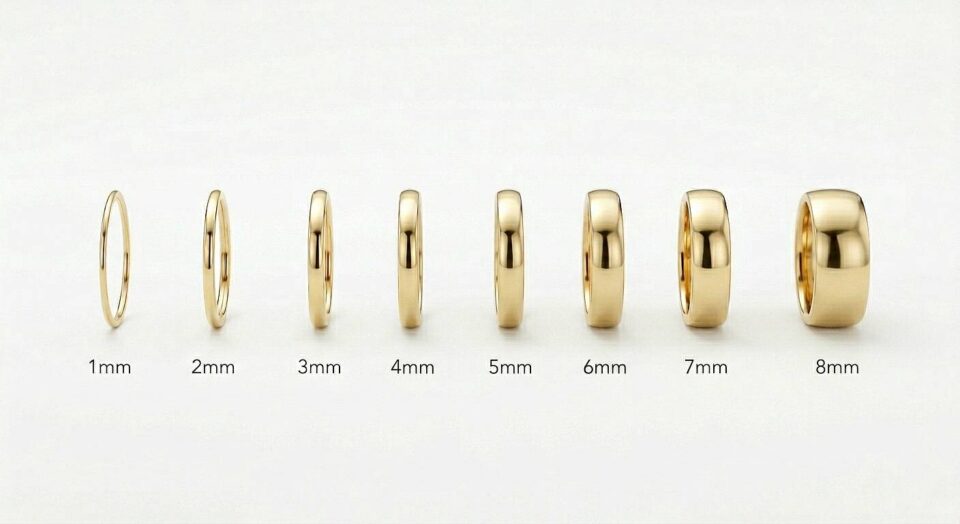
Below is a practical guide ranging from 1mm to 8mm to help you choose with confidence — not just visually, but functionally.
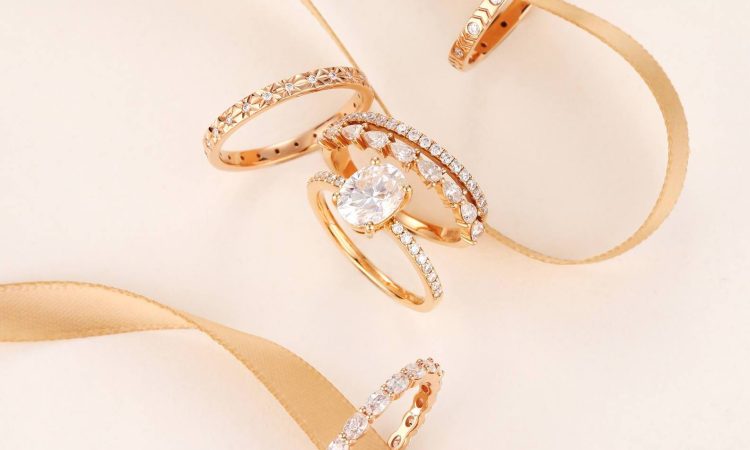
Table of Contents
Table of Contents
- How Wide Should a Wedding Band Be?
- Visual Comparison: 1mm to 8mm Explained
- 3 Critical Factors to Consider When Choosing Your Width
- Wedding Band Width vs. Thickness — Why It Matters
- Pros and Cons of Different Widths
- Does Width Affect the Price?
- How to Measure Your Ideal Wedding Band Width at Home
- Conclusion: What Most Couples Choose
- Wedding Band Width FAQ
How Wide Should a Wedding Band Be?
How Wide Should a Wedding Band Be?
Here’s a quick starting point based on real-world scenarios:
- Small Hands (Ring Size 4–6): 2mm–3mm keeps the ring proportional and elegant. Wider bands can make petite fingers look shorter.
- Average Women’s Hands (Ring Size 6–5): 2.5mm-4mm offers a balance between delicacy and durability.
- Average Men’s Hands (Ring Size 8–10): 4-6 mm provides a presence without feeling bulky.
- Larger Hands (Ring Size 10+): 6-8 mm maintains visual proportion. Very thin bands may look “lost.”
- Minimalist Preference: 1-2 mm gives a barely-there look.
- Bold Statement Style: 7mm+ creates a modern, substantial feel.
If you’re still unsure, 4 mm is the most versatile unisex width. It looks refined on women and modern and slim on men. Trends come and go, but proportion and comfort are what you’ll notice every day.
Visual Comparison: 1mm to 8mm Explained
Visual Comparison: 1mm to 8mm Explained
How does each width look and feel? Here’s what wedding band widths typically look and feel like:
1–2 mm: Ultra-delicate and lightweight. Perfect for stacking or minimalist rings. Beautiful, but prone to bending under heavy daily wear.
2mm–3mm: The most popular width for women. They are slim enough to let an engagement ring shine, yet sturdy enough for everyday use.
4mm: Currently the most popular unisex width. It offers structure without bulk. If buying as a surprise, 4 mm is generally a safe choice.
5mm–6mm: A classic, masculine proportion. It has a noticeable presence without overwhelming the hand.
7mm–8mm: Bold and substantial. Ideal for larger hands or for those who want a statement ring.
3 Critical Factors to Consider When Choosing Your Width
3 Critical Factors to Consider When Choosing Your Width
Although standard ranges provide guidance, your personal proportions and lifestyle are the most important factors.
1. Hand & Finger Size
1. Hand & Finger Size
A simple rule of thumb is that a band should cover 60–75% of the visible top width of your finger.
- Narrow fingers → slimmer bands look harmonious.
- Wide fingers → mid to wider bands feel proportional.
Too thin a band can disappear. Too wide a band can feel overwhelming. Balance is key.
2. Lifestyle & Comfort
2. Lifestyle & Comfort
In daily wear, comfort is often more important than appearance.
Ask yourself:
- Do you work with your hands?
- Do you go to the gym frequently?
- Do you prefer lightweight jewelry?
Wider bands feel snugger because they touch more skin. Thinner bands feel lighter, but they may bend over time. If you type all day, lift weights, or wear gloves at work, the width of your band matters more than you think.
3. Proportion with Your Engagement Ring
3. Proportion with Your Engagement Ring
When stacking with an engagement ring, proportion is key.
Guideline: The wedding band width is approximately the same as the engagement ring shank width, or it can be made slightly thinner to ensure stacking harmony.
A much wider band can visually overpower the engagement ring.
At MollyJewelryUS, we recommend bringing your engagement ring measurements when designing a custom band to ensure perfect alignment and comfort.
Wedding Band Width vs. Thickness — Why It Matters
Wedding Band Width vs. Thickness — Why It Matters
The wedding band width is horizontal, or across your finger. Thickness, or profile, is vertical (the height off your finger).
Two 4mm bands can feel completely different depending on their thickness.
- A thin-profile 4mm band feels light and low.
- A thick-profile 4 mm band feels heavier and more substantial.
Wider bands touch more skin, so they may feel tighter even if the ring size is correct.
Understanding both measurements helps you avoid long-term discomfort.
Pros and Cons of Different Widths
Pros and Cons of Different Widths
There are trade-offs in aesthetics, durability, and cost with each width range.
| Width Category | Best For | Pros | Cons |
|---|---|---|---|
| Thin (1–3mm) | Stacking, Small hands | Elegant, lightweight, lower cost | Less durable, can "disappear" on large hands |
| Mid (4–6mm) | Classic look, Unisex | Perfect balance, very durable, most popular | Might feel "standard" to some; mid-range price |
| Wide (7–8mm) | Statement, Large hands | Extremely durable, bold look, more room for design | Heavier, more expensive, can be less comfortable |
Does Width Affect the Price?
Does Width Affect the Price?
Yes, significantly. Precious metals like gold and platinum are priced by the gram. A wider band requires more raw material.
- Metal Weight: A 6 mm band can weigh nearly twice as much as a 3 mm band.
- Price Gap: Expect a 30%-60% price increase when upgrading from a 3mm to a 6mm band made of the same metal and sized for the same finger.
At MollyJewelryUS, we provide transparent metal weight breakdowns so that you know exactly what you’re paying for: material and craftsmanship rather than a brand markup.


How to Measure Your Ideal Wedding Band Width at Home
How to Measure Your Ideal Wedding Band Width at Home
If you’re unsure what width will feel right, test it out.
- Cut a thin strip of paper.
- Wrap it across the top of your finger, not around it.
- Mark where it looks balanced.
- Measure the width in millimeters.
- Compare it to standard band widths.
If you are stacking it with an engagement ring, test them together to check the total coverage. Seeing it on your hand changes everything!
Conclusion: What Most Couples Choose
Conclusion: What Most Couples Choose
Although trends vary, most couples select the following widths:
- 3 mm for women
- 4 or 5 mm for men
- 4 mm as the safest unisex choice
The best wedding band width is the one that feels balanced and comfortable on your hand for everyday life, not just the one that looks good in photos.
At MollyJewelryUS, we help couples find that balance through thoughtful design, proportion guidance, and customization options for everyday wear. Ready to find your perfect fit? Explore our Wedding Band & Rings Collection to see these widths in action.
Wedding Band Width FAQ
Wedding Band Width FAQ
Is 4MM too Thin for a Wedding Band?
No, 4 mm is considered a medium width that works well for both men and women. It is one of the most popular and versatile options available.
Does Ring Width Affect Comfort?
Yes. Wider bands feel tighter because they cover more of the skin’s surface area. Thinner bands feel lighter, but they may feel less substantial over time.
Should My Wedding Band Match My Engagement Ring?
It doesn’t have to, but similar widths and metal tones create visual harmony. Slightly thinner bands often stack best with engagement rings.
Can Wedding Rings Be Resized if the Width Feels Wrong?
Resizing adjusts the circumference, not the width. The width usually cannot be changed after manufacturing. It’s important to choose the correct width initially.